How Do NDIS Cooking Programs Build Independence for Young Adults with Disability?
By: gfcdev
January 19, 2026
Answering: How Do NDIS Cooking Programs Build Independence for Young Adults with Disability?
Estimated reading time: 9 min read
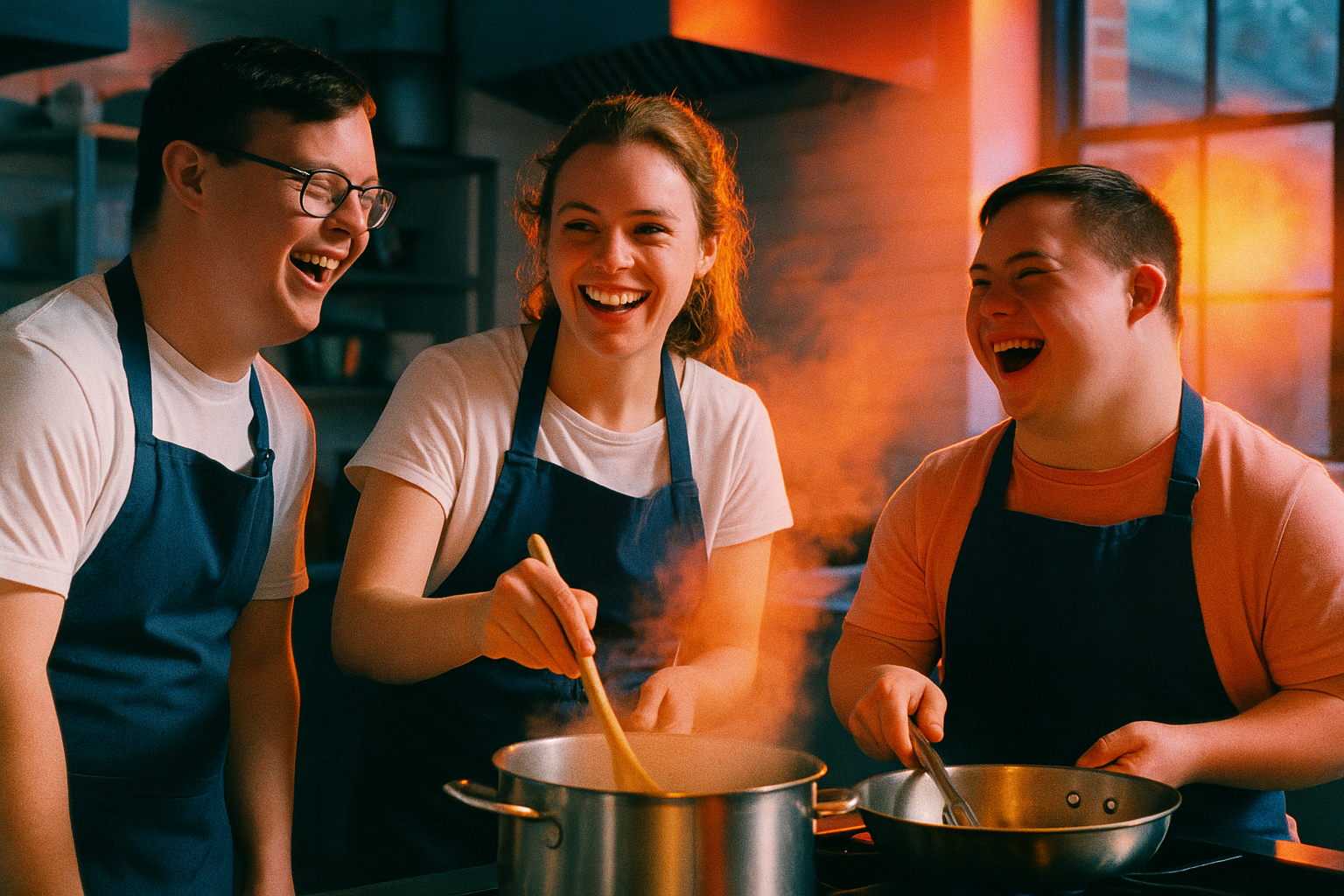
Yes, NDIS cooking programs build independence for young adults with disability by teaching the complete meal cycle, from planning and shopping through to preparation and cleanup, with 85% of participants gaining meal planning confidence within 12 weeks across Melbourne programs. These programs work through structured skill progression in certified commercial kitchens, where support workers gradually step back as participants demonstrate competence. Based on Personalised Support Systems’s commercial kitchens at both Nunawading and Sunbury hubs, participants move from supervised cooking to independent meal prep through consistent weekly practice, building skills that transfer directly to their own homes.
You’ve probably watched your young adult show interest in the kitchen, only to wonder whether a cooking program would actually make a difference. The fear that they’ll just follow instructions without understanding why, or that skills learned in a group setting won’t stick at home, is completely valid. You want real independence for them, not just supervised activity that looks good on paper.
The reality is that success depends on program design, support worker approach, and how skills are taught. Not all NDIS cooking programs deliver the same outcomes. Programs that only teach recipe execution miss the point entirely. The ones that build lasting independence focus on decision-making, problem-solving, and adapting when things go wrong.
With commercial kitchens operating at both Melbourne hubs, the program model is replicable and consistent whether your young adult attends in the inner-east or north-west. This guide breaks down what real cooking independence looks like, how Melbourne programs build confidence through practice, and the differences between local options.
Key Insights
- Cooking independence isn’t about following recipes. It’s about choosing what to eat, adapting to what’s available, and solving problems when the plan changes.
- Programs running 2-3 hours weekly over 8-12 weeks consistently outperform intensive short courses.
Keep reading for full details below.
Table of Contents
- Beyond Recipes: What Real Independence Looks Like
- How Melbourne Programs Build Confidence Through Practice
- From Nunawading to Sunbury: Local Program Differences
- Frequently Asked Questions
- Want to Learn More?
- Citations
Beyond Recipes: What Real Independence Looks Like
NDIS cooking programs Melbourne that deliver genuine outcomes teach the full cycle. That means meal planning, grocery shopping with a budget, preparation, and cleanup. Not just chopping vegetables while someone else decides what’s for dinner. Independence means your young adult chooses what to eat, not just executes someone else’s plan.
Cooking programs designed for disability support build confidence through structured progression. Week one might focus on safe knife handling and measuring basics. By week eight, participants tackle multi-step meals. Regular practice in the same space builds muscle memory and routine confidence that transfers home.
Life skills programs under NDIS Capacity Building, specifically the Daily Living category, develop sequencing, time management, and decision-making alongside practical cooking techniques. Your young adult learns to think through the order of tasks, manage competing timers, and make adjustments when ingredients run out.
Support workers guide each step initially, then gradually step back as participants demonstrate competence. This scaffolding approach, breaking tasks into smaller steps and removing support as confidence grows, is what separates skill-building from supervised activity.
When evaluating programs, consider these action points:
- Ask about their approach to meal planning and grocery shopping skills, not just cooking techniques
- Request a skill progression chart showing how participants move from supervised cooking to independent meal prep
- Look for documented timelines and outcomes, not just attendance records
How Melbourne Programs Build Confidence Through Practice
Commercial-grade kitchens in purpose-built hubs provide safe spaces where young adults can make mistakes, learn, and repeat without judgment. Personalised Support Systems operates certified commercial kitchens at both Nunawading and Sunbury locations, meeting health department standards. Small group settings of 4-6 participants ensure hands-on time with support workers who feel more like older siblings than clinical staff.
Program design matters more than most parents realise. Regular weekly sessions build routine and muscle memory faster than sporadic intensive programs. Participants in the same group develop peer accountability and social connection alongside cooking skills. That social element often becomes the motivation to keep showing up.
The support worker relationship directly impacts learning. Younger, energetic team members often connect better with young adults than clinical staff working from a textbook. Workers trained in disability-confident teaching use scaffolding effectively, knowing exactly when to step in and when to let someone work through a challenge.
Progress tracking should show actual independence, not just attendance. Good NDIS cooking programs Melbourne document when participants move from “requires support” to “supervised independently” to “fully independent” on specific tasks like using the stovetop, following a written recipe, or shopping for ingredients.
Before committing, take these steps:
- Visit during a program session to observe teaching style and participant engagement
- Check current health and safety certifications displayed in the kitchen
- Ask for sample progress reports showing skill development over 8-12 weeks
From Nunawading to Sunbury: Local Program Differences
Melbourne’s eastern suburbs and north-western growth corridors serve different demographics, which affects program design. Nunawading programs often reflect multicultural food preferences from inner-Melbourne communities. Sunbury programs frequently emphasise budget-friendly batch cooking and food storage for families managing tighter budgets.
Transport and accessibility differ significantly between locations. Nunawading sits in Melbourne’s established inner-east with solid public transport options. Sunbury requires parking or shuttle coordination for most families. Your choice should account for your young adult’s transport independence or your household’s logistics.
Both locations operate under the same NDIS Practice Standards for Capacity Building Supports. Local council environmental health oversight and accessibility features vary slightly. Sunbury’s growth corridor placement means newer facilities, while Nunawading offers established community networks and referral pathways built over years.
Personalised Support Systems has operated since 2018 with strong referral networks positioned in both Melbourne’s inner-east and north-west corridors. That dual geographic presence means families across Melbourne have realistic access to consistent programming.
To find the right fit:
- Check public transport routes to Nunawading or parking availability at Sunbury
- Verify wheelchair accessibility and disability parking if needed
- Ask about cultural food preferences and dietary accommodations, including allergies and religious requirements
When you’re evaluating NDIS cooking programs Melbourne, remember that commercial kitchens with current health certifications indicate serious investment in proper training environments. The NDIS Disability Support Services framework supports these programs under Capacity Building, making quality cooking instruction accessible for young adults ready to build genuine independence. The first meal your young adult makes alone changes everything. That’s not just cooking. That’s agency.
For a deeper look, visit https://www.personalisedsupports.com.au/group-programs/
Frequently Asked Questions
Q: Can my young adult join a cooking program if they’ve never cooked before?
A: Absolutely—that’s exactly who these programs are designed for. NDIS cooking programs across Melbourne start with basics like washing vegetables, using measuring cups, and safe knife handling. Support workers guide every step initially, then gradually step back as confidence grows. Most participants who’ve never turned on a stove are making simple meals independently within three months. The key is finding a program that matches your young adult’s learning pace, communication style, and food preferences. Look for programs using scaffolding (breaking tasks into smaller steps) and offering choice in recipe selection—that’s when real agency and confidence take hold.
Q: How do I know which program will actually work for my young adult?
A: Visit the kitchen during a live session and observe the teaching style, participant engagement, and support worker ratio firsthand. Ask about their approach to meal planning and grocery shopping skills—not just cooking techniques. Request specific examples of progression (e.g., “Week 1 learning to hold a knife safely; Week 6 planning and shopping for a three-course meal independently”). Good programs document when participants move from “requires support” to “supervised independently” to “fully independent” on specific tasks, so ask for sample progress reports showing skill development over 8–12 weeks.
Q: How long does it actually take to see real independence develop?
A: Most participants progress from beginner to independent meal prep within 8–12 weeks of consistent attendance. Programs typically run 2–3 hours weekly, with some offering intensive holiday programs for faster progression. The timeline depends on your young adult’s starting point, learning pace, and attendance consistency. Regular practice in the same space—whether Nunawading or Sunbury—builds muscle memory and routine confidence faster than sporadic sessions. You’ll see the shift when they start problem-solving on their own (adapting a recipe based on what’s in the fridge, for example) rather than just following instructions.
Q: What’s the first step if I think an NDIS cooking program could help?
A: Review your NDIS plan for available Capacity Building – Daily Living or Social and Community Participation funding first. Then contact a provider like Personalised Support Systems to confirm your plan is eligible and book an initial assessment. During assessment, they’ll match your young adult to the right skill level group and clarify support intensity needs. Ask about transport options (Nunawading has public transport access; Sunbury offers parking) and cultural food preferences or dietary accommodations so the program fits your family’s actual life.
Want to Learn More?
We’ve drawn on decades of disability support expertise and evidence-based practice standards to create this comprehensive guide for Melbourne families navigating NDIS cooking programs. Our focus is on helping you understand what genuine independence looks like—and how to spot programs that actually deliver it.
If you’d like to learn more, visit https://www.personalisedsupports.com.au/group-programs/ to explore how we approach NDIS cooking programs that build genuine independence for young adults with disability.
Ready to see what real independence looks like in action? Come visit our certified commercial kitchens in Nunawading or Sunbury—watch a program session, meet the team, and talk through how cooking skills could open doors for your young adult. With 200+ participants, 85+ team members, and 90% staff retention since 2018, we’ve built something that works. Progress isn’t just tracked on attendance sheets—it’s measured in the confidence your young adult gains, the meals they plan and cook independently, and the life skills that stick. Book a tour or initial assessment today, and let’s find out what’s possible.
Citations
- “NDIS Cooking Classes & Learn to Cook” — This resource outlines foundational approaches to cooking skill development within NDIS frameworks, confirming that structured progression and real-world application are core to effective programming. https://rlsss.com.au/ndis-cooking-classes/
- “NDIS Life Skills & Independence (2025 Guide)” — Comprehensive guide to capacity building supports under the NDIS, detailing how daily living programs—including cooking—develop sequencing, time management, and decision-making skills that transfer across multiple life domains. https://www.supportsorted.com/articles/disability/education-employment-life-transitions/life-skills-programs-ndis
- “NDIS Provider – 100 Mile Foodie” — Practical example of specialised NDIS cooking and food education providers, demonstrating how commercial kitchens and structured curriculum support independence outcomes for young adults with disability. https://100milefoodie.com.au/ndis-provider/
All quality NDIS cooking programs operate under the NDIS Practice Standards for Capacity Building Supports, ensuring consistency in skill assessment, individualised learning plans, and evidence-based scaffolding techniques. Health and safety compliance—including certified commercial kitchens and current environmental health oversight—is non-negotiable across all locations.
82%
Quality Verified
This content scored 82% in the Probably Genius Publication Readiness Assessment, meeting standards for direct answers, section depth, proof points, citation quality, and AI extractability.